If you’re stuck deciding between a dump trailer vs roll off, the wrong choice usually shows up fast – wasted space, harder loading, driveway problems, or extra costs you did not expect. For a home cleanout, rental turnover, yard project, or small construction job, the best option depends on what you’re loading, how much room you have, and how hands-on you want the process to be.
A lot of people assume these are basically the same thing. They are not. Both are built to handle debris and junk, but they work differently in the real world. That difference matters when you’re trying to keep a project moving, avoid damage to the property, and stay within budget.
Dump trailer vs roll off: the basic difference
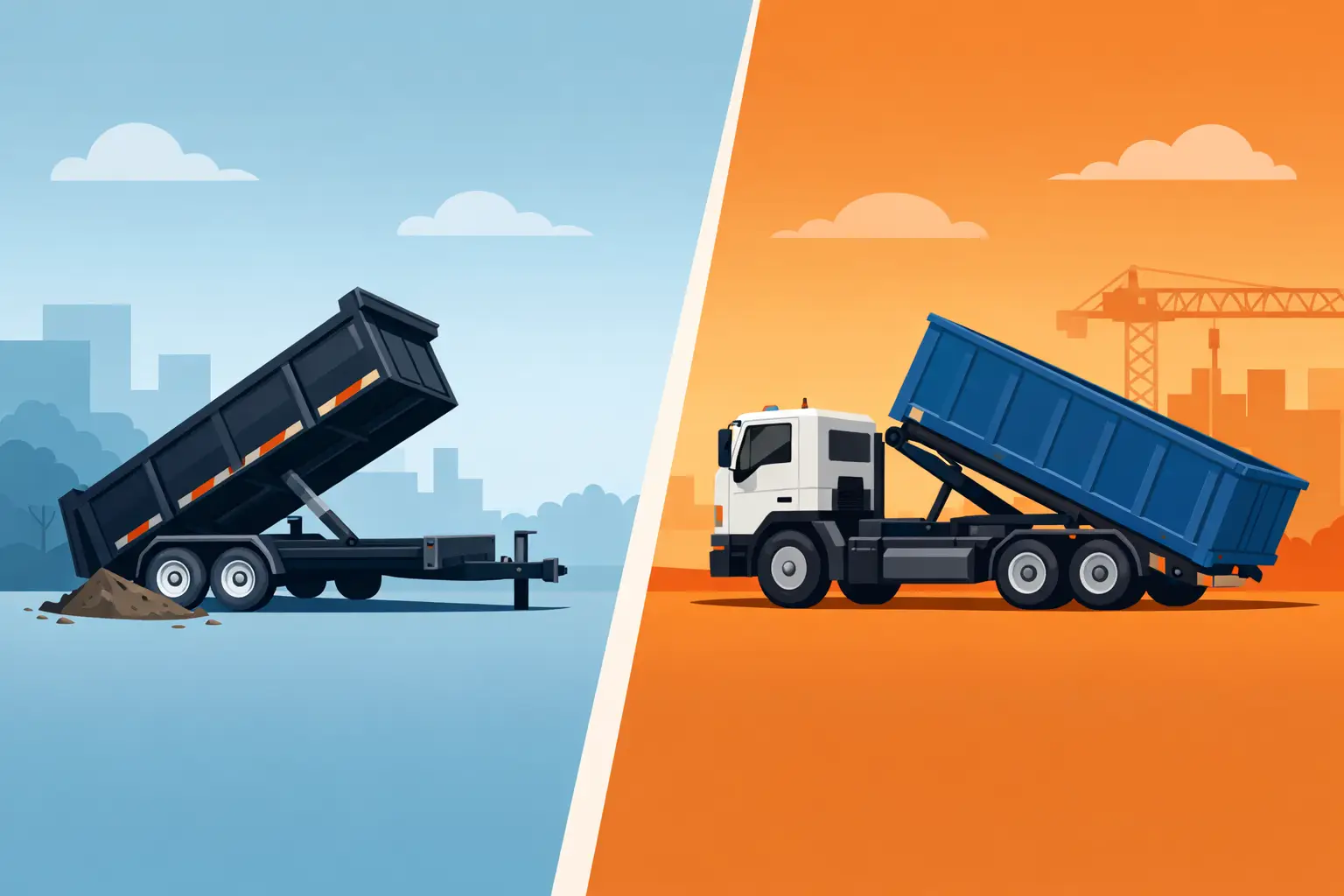
A dump trailer is a trailer that gets dropped at your property and hauled by a truck when it’s full. It usually has lower side walls than a roll off container and can often be easier to place in tighter spaces. Because it tips for unloading, it is designed to dump material out efficiently once it reaches the disposal site.
A roll off is a large open-top container that rolls on and off a specialized truck. It is common on bigger construction sites, roofing jobs, major remodels, and large-volume cleanouts. Roll offs usually offer more capacity, but they also need more room for delivery and pickup.
That is the simple version. The real choice comes down to access, debris type, weight, and how easy you want loading to be.
When a dump trailer makes more sense
For many residential customers, a dump trailer is the more practical option. If you are cleaning out a garage, removing yard debris, tearing out an old shed, or getting rid of bulky junk over a couple of days, a dump trailer often gives you enough capacity without taking over the whole driveway.
One big advantage is loading height. Lower walls can make a real difference when you are lifting heavy furniture, bagged trash, fence boards, or broken concrete by hand. If you’re not using machines to load, a few inches matter. Less lifting usually means a safer and faster cleanup.
Placement is another reason people choose a dump trailer. In tighter residential areas, space can be limited. You may have a short driveway, parked cars nearby, or a property layout that makes larger equipment harder to maneuver. A dump trailer can often fit where a roll off would be more awkward.
This option also works well for customers who want some flexibility without managing disposal themselves. That is a good fit for DIY cleanup jobs where you want time to load at your own pace but still want hauling handled by a professional.
When a roll off is the better choice
A roll off starts to make more sense when volume is the main issue. If you are dealing with a full renovation, roofing tear-off, major demo debris, or a large commercial cleanup, a roll off usually gives you more container space and a better setup for ongoing waste generation.
Contractors often prefer roll offs because they can handle bigger jobs without needing as many pickups. On projects where debris piles up fast, container size matters more than convenience of hand-loading. If crews are tossing material in throughout the day, a larger box can keep the site cleaner and reduce interruptions.
Roll offs can also be the right move for jobs with bulky but lighter debris, like drywall, framing scraps, and packaging waste. You get more room to work with, and that can be worth it if the property has enough access for delivery.
The trade-off is footprint. A roll off needs more clearance and can be harder on tighter properties. If the driveway is narrow, the street is busy, or the drop area is limited, that larger container can become a hassle.
Cost is not just about the container
A lot of customers start with one question: which one is cheaper? Fair question, but the answer depends on more than the rental itself.
With a dump trailer, you may save money if your job is moderate in size and you do not need oversized container capacity. You may also reduce labor strain because of the lower loading height. That matters if you are doing the work yourself or asking employees or tenants to help load.
With a roll off, the upfront price can make sense for larger projects because the bigger size may reduce the need for multiple hauls. But if you do not actually need that much space, paying for a larger container is not always efficient.
Weight matters too. Heavy materials like dirt, concrete, roofing shingles, and tile can change the math quickly. A large container filled with dense material can create weight-related overage issues or require stricter loading limits. Sometimes the better value is not the biggest option. It is the option that matches the material.
That is why a quick quote without talking through the debris can miss the mark. The cheapest-looking option on paper is not always the cheapest once hauling, tonnage, property access, and loading difficulty are factored in.
Think about your property before you book
This is where a lot of avoidable problems happen. People choose based on size alone, then delivery day comes and the container does not fit where they expected, blocks access, or creates concerns about driveway wear.
A dump trailer is often easier to place on residential properties, especially when space is limited. If you are in a neighborhood with tighter lots or you need to keep part of the driveway usable, this can be a big advantage.
A roll off needs more room not just for the container, but for the truck to deliver and retrieve it safely. Overhead wires, tree branches, gates, slopes, and parked vehicles can all affect placement. If access is tight, the larger option can cost you time before you even start loading.
Surface condition matters as well. If you are worried about a finished driveway, pavers, or soft ground, ask about placement and protection before scheduling. It is always easier to plan ahead than deal with damage after the fact.
Loading debris: where the difference really shows
On paper, both options hold junk and debris. In practice, loading them can feel very different.
If you are tossing lightweight construction debris with a crew, the taller sides of a roll off may not bother you much. If you are one homeowner lifting old appliances, broken fencing, yard waste, and garage junk by hand, a dump trailer can be far easier to live with.
That loading height issue gets even more important during longer projects. The first few trips over the side may be fine. By the end of the day, that extra effort adds up. Convenience is not just about comfort. It affects how quickly and safely the job gets done.
There is also the question of what cannot go in. Disposal rules vary by material, and certain items may require separate handling. Electronics, tires, hazardous waste, chemicals, and some appliances may not belong in either container without prior approval. That is another reason it helps to work with a local hauling company that can tell you what is allowed before you start filling the container.
So which one should you choose?
If your job is residential, space is limited, and you want easier hand-loading, a dump trailer is often the smarter fit. It works well for home cleanouts, yard projects, small remodels, rental property turnovers, and general junk removal where convenience matters as much as capacity.
If your job is larger, debris is constant, and the site has enough access, a roll off may be the better tool. It is usually the stronger choice for major construction, demolition, roofing, and commercial jobs where volume is the priority.
For customers in Bakersfield, that choice often comes down to the kind of cleanup you are facing right now, not just what sounds bigger. A company like Rojas Junk Removal can help you sort that out based on the material, the property, and how fast you need the job handled.
The best container is the one that fits your space, your debris, and your timeline without creating extra work. If you’re not sure, start with the job details, not the container name. That is usually where the right answer shows up.