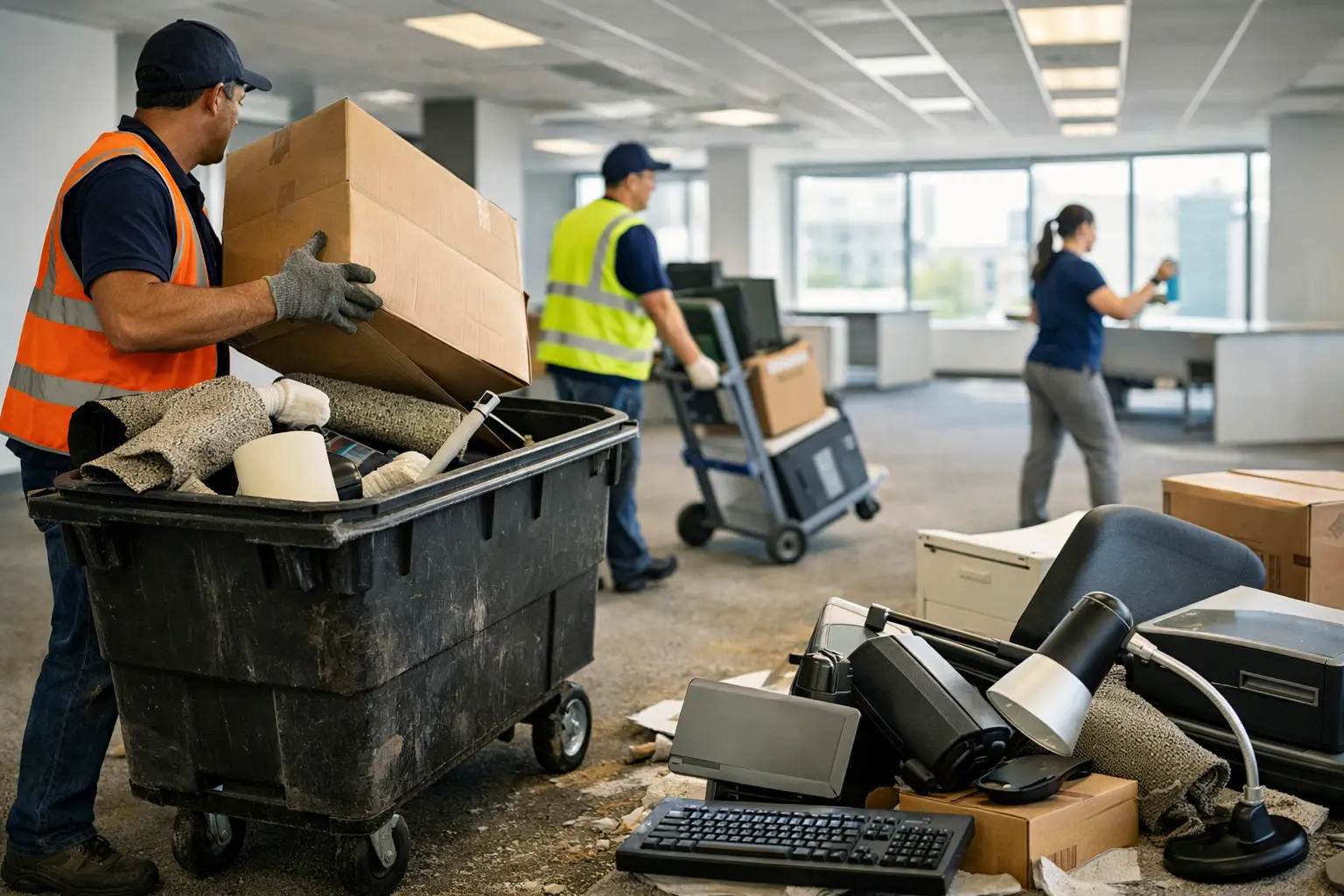
A commercial space can look manageable until the last tenant leaves behind desks, shelving, broken equipment, old inventory, and a back room full of mystery boxes. This commercial property cleanout guide helps property managers, business owners, and landlords clear a space without losing days to sorting, hauling, and disposal problems.
The goal is not simply to make the property empty. A good cleanout gets the space ready for its next purpose – a new tenant, renovation, sale, inspection, or reopening – while keeping the work safe, organized, and on schedule.
Start With the Turnover Deadline
The cleanout plan should begin with the date the property needs to be usable, not the date someone is available to start hauling. A retail unit preparing for a new tenant may need to be empty and swept within a few days. A warehouse cleanout before construction may need more time for equipment removal, recycling, and debris hauling.
Walk the property early and document what is there. Take photos of each room, storage area, loading dock, outdoor enclosure, and any items left behind by a tenant. This protects the owner or manager if there is a question about damage, abandoned property, or what was removed.
It also helps you get an accurate quote. “A few items” can turn into multiple truckloads when there are cubicles, file cabinets, display racks, pallets, and debris hidden in closets or behind counters. Clear photos and a site walkthrough make pricing more straightforward and help the hauling crew bring the right labor and equipment.
Make a Clear Keep, Donate, Recycle, and Remove Plan
Before anyone starts loading, separate items by what needs to happen to them. This avoids the common mistake of throwing out usable equipment or accidentally removing items that belong to the owner, incoming tenant, or building.
Items worth keeping should be clearly marked and moved to one designated area if possible. That may include security equipment, signage, fixtures, maintenance supplies, keys, records, or furniture the next tenant plans to use. If an item is staying, make that obvious. A piece of tape and a written note can prevent an expensive mix-up.
Usable furniture and supplies may be suitable for donation, depending on their condition and the timeline. Recycling is often the right route for metal shelving, cardboard, certain electronics, appliances, and other materials that should not go into a standard trash load. Everything else can be removed as junk, debris, or bulk waste.
Do not spend hours trying to sort every small item if the property has a tight deadline. For a fast turnover, focus on separating valuable items, paperwork, electronics, hazardous materials, and anything that requires special handling. A professional cleanout crew can handle the heavy lifting and remove the remaining non-hazardous material efficiently.
Check the Lease and Building Requirements First
Commercial leases often require more than an empty floor. The tenant may be responsible for removing fixtures, patching walls, taking down signage, clearing exterior trash areas, or returning the unit in broom-clean condition. A property manager may also have building rules for elevator use, loading zones, work hours, and dumpster access.
Review the lease before scheduling the cleanout. If the tenant installed display cases, wall-mounted televisions, restaurant equipment, workbenches, or custom shelving, confirm whether those items must stay, be removed, or be repaired after removal.
This is where a cleanout can become a construction project. Removing built-in counters or anchored shelving may leave holes, damaged drywall, exposed wiring, or flooring issues. Junk hauling handles the removal and loading, but repairs may need a contractor. Planning for both services keeps the property from sitting empty after the debris is gone.
For multi-tenant buildings, notify the right people before work starts. Let building management, security, maintenance teams, and neighboring businesses know when trucks and crews will be on site. It reduces access problems and keeps the job from disrupting normal operations.
Commercial Property Cleanout Guide: Handle Special Items Safely
Some commercial items cannot be treated like regular junk. Identify these before the crew arrives so there are no last-minute delays.
Electronics deserve special attention. Computers, monitors, printers, phones, servers, point-of-sale systems, and cable boxes may contain business data even after they are no longer in use. Remove or securely destroy hard drives and storage devices before disposal. If the business handles customer information, employee records, financial information, or health data, data security should be part of the cleanout plan.
Hazardous materials should be separated and disclosed. Common examples include paint, solvents, chemicals, oils, fuel, pesticides, propane tanks, fluorescent bulbs, batteries, and certain cleaning products. These materials have different disposal rules and may require a specialized provider. Do not mix them into a general debris pile just to get the space cleared faster.
Large appliances and commercial equipment also need planning. Refrigerators, freezers, ice machines, copiers, vending machines, and restaurant equipment can be heavy, awkward, and sometimes connected to electrical, plumbing, or gas lines. Have qualified professionals disconnect utilities before removal. A hauling crew should not arrive to find a machine still tied into a water line or powered circuit.
If the property contains medical waste, biohazards, asbestos-containing materials, or unknown chemicals, stop and bring in the appropriate specialist. Speed matters during a turnover, but shortcuts around safety create bigger costs later.
Plan the Work Area, Access, and Labor
Cleanouts move faster when the loading path is clear. Reserve loading zones, unlock gates, clear parked vehicles, and make sure the crew can access the right doors. In a warehouse or larger commercial property, identify the shortest path from the material to the truck or trailer.
For upper-floor offices, confirm elevator access, weight limits, and protection requirements. Some buildings require floor coverings or wall protection during moves. In older properties, narrow hallways and stairs can add labor, especially for large desks, conference tables, file cabinets, and appliances.
You should also decide what work will happen before hauling starts. Employees may need time to remove personal belongings, gather records, or identify company-owned equipment. Contractors may need to disconnect fixtures. Janitorial crews may need access after the junk is removed. When these tasks happen out of order, crews wait around and deadlines slip.
A simple sequence usually works best: secure records and valuables, disconnect equipment, remove junk and bulky items, complete repairs, then schedule final cleaning. For properties with a short turnaround, some tasks can overlap, but only if the work areas stay safe and organized.
Know What Drives the Cost
Commercial cleanout pricing depends on the amount of material, labor required, access conditions, and disposal needs. A ground-floor office with a few pieces of furniture costs less to clear than a crowded second-story unit with heavy filing cabinets, e-waste, and a long carry distance.
The fastest way to avoid surprises is to be upfront about the job. Share photos, square footage, item types, floor level, elevator availability, parking conditions, and any especially heavy or unusual items. If there are multiple rooms or outdoor areas, include those too.
It may be tempting to choose the lowest quote without asking what it includes. Make sure you understand whether the price covers labor, loading, hauling, disposal, and basic sweep-up. Ask how added items are handled if the scope changes. Upfront pricing is more useful when everyone agrees on what is being removed before the work begins.
For smaller jobs, a dump trailer rental can make sense if your team has the labor to load it and wants to work on its own schedule. For a full office, retail, warehouse, or tenant turnover, full-service removal is often the better value because the crew handles the lifting, loading, hauling, and disposal logistics.
Finish With a Final Walkthrough
Before the truck leaves, walk the property with the crew lead or project contact. Check closets, cabinets, restrooms, break rooms, storage cages, rooftops, patios, and exterior trash areas. These are the places where old furniture, boxes, signage, and equipment are often missed.
Look for nails, loose debris, broken glass, spills, and items left in corners. Confirm that marked keep items remain on site and that the space is clear enough for the next step, whether that is cleaning, repairs, inspection, or a new tenant move-in.
For Bakersfield-area commercial property managers and business owners, Rojas Junk Removal can handle the labor-heavy part of a fast cleanout, from office furniture and retail fixtures to appliances, e-waste, bulk debris, and outdoor junk. The right crew helps you clear the space without turning your turnover deadline into a bigger problem.
A vacant commercial unit costs time every day it sits unfinished. Set the plan early, identify special items before removal day, and use a hauling solution that can keep up with the deadline.