That old refrigerator in the garage is not just taking up space. It is heavy, awkward to move, and may contain materials that cannot simply be left at the curb. The best options for appliance disposal depend on what you have, whether it still works, and how quickly you need it gone.
For Bakersfield homeowners, renters, landlords, and contractors, the right choice usually comes down to three things: convenience, cost, and proper handling. A working washer may be worth donating or selling. A broken freezer may need recycling. A full property cleanout may call for a crew that can load everything in one visit.
Best Options for Appliance Disposal Based on Condition
Before arranging pickup or loading anything into a truck, take a quick look at the appliance. Is it clean, complete, and in working condition? Is it a small countertop item, or a large unit that requires two people and a dolly? Those answers will help you avoid wasted time and choose the option that makes sense.
Sell or give away working appliances
If an appliance still runs well and looks decent, selling it or giving it away can be a practical first move. Washers, dryers, refrigerators, ranges, dishwashers, and microwaves may be useful to someone setting up a home, managing a rental, or replacing a unit on a budget.
This option can save disposal costs, but it is not always the fastest. You will need to take photos, answer messages, coordinate pickup, and make sure the buyer can safely move the item. If you need a unit gone before a move-out inspection, renovation, or tenant turnover, waiting for a buyer can create more hassle than it saves.
Only offer appliances that are safe and honestly represented. A refrigerator that does not cool, a dryer with electrical issues, or a stove with damaged connections should not be passed along as a working unit.
Donate usable appliances
Donation is a good choice when the appliance works, is clean, and has plenty of service life left. Some charitable organizations and reuse programs accept certain appliances, particularly when they are newer and in good condition.
Call ahead before loading or scheduling a drop-off. Acceptance rules vary, and many locations will not take appliances with rust, missing parts, heavy wear, or mechanical problems. Refrigerators and other cooling appliances can also have extra requirements because of refrigerant handling.
Donation feels good when it works, but do not let a rejected donation hold up your cleanup. If a property needs to be cleared on a deadline, have a backup disposal plan ready.
Use a retailer haul-away service for replacements
Buying a new appliance? Ask the retailer whether they will remove the old one when they deliver the replacement. This can be one of the easiest options for a single appliance, especially for a refrigerator, washer, dryer, or range.
The downside is that it is tied to your delivery date and may come with a fee. Retailers may also require the appliance to be disconnected, accessible, and ready at ground level. They may not remove extra junk from the garage, haul appliances down stairs, or handle units left behind in a rental property.
For a simple swap, retailer haul-away is convenient. For several appliances or a larger cleanup, it may not cover enough.
Recycling Appliances the Right Way
Appliance recycling keeps metal, plastic, glass, and other recoverable materials out of the waste stream. It is especially useful for broken, outdated, or inefficient appliances that are no longer worth repairing.
Large appliances are often made with valuable scrap metal, but that does not mean every unit can be dropped anywhere. Refrigerators, freezers, air conditioners, and dehumidifiers may contain refrigerant. Those materials need proper recovery before the appliance is processed. Never cut lines, damage the cooling system, or try to drain anything yourself.
Smaller appliances such as toasters, blenders, coffee makers, and countertop microwaves may have different recycling options than major appliances. Because rules and accepted items can change, confirm what a local facility accepts before making the drive.
Recycling is often a strong option if you have the time, a suitable vehicle, and help loading the appliance. The trade-off is the labor. A refrigerator can be difficult to maneuver through doorways, and a washer can weigh far more than people expect. One wrong lift can damage flooring, walls, your truck, or your back.
When Curbside or Bulk Pickup Makes Sense
Some areas offer bulky-item collection or special pickup programs for large household items. This can be affordable for a limited number of appliances if you can meet the scheduling rules and set-out requirements.
Check the details before relying on it. Many programs require advance scheduling, limit the number of items, exclude certain appliances, or require refrigerant-containing units to be prepared in a specific way. Set-out rules can also be a problem for apartments, neighborhoods with HOA restrictions, and commercial properties.
Curbside pickup is best when you have time to wait, the item is accepted, and you can safely get it to the approved pickup area. It is less useful when a landlord needs a unit removed before new tenants arrive or when a contractor needs debris cleared from a job site now.
Full-Service Pickup for Heavy or Multiple Appliances
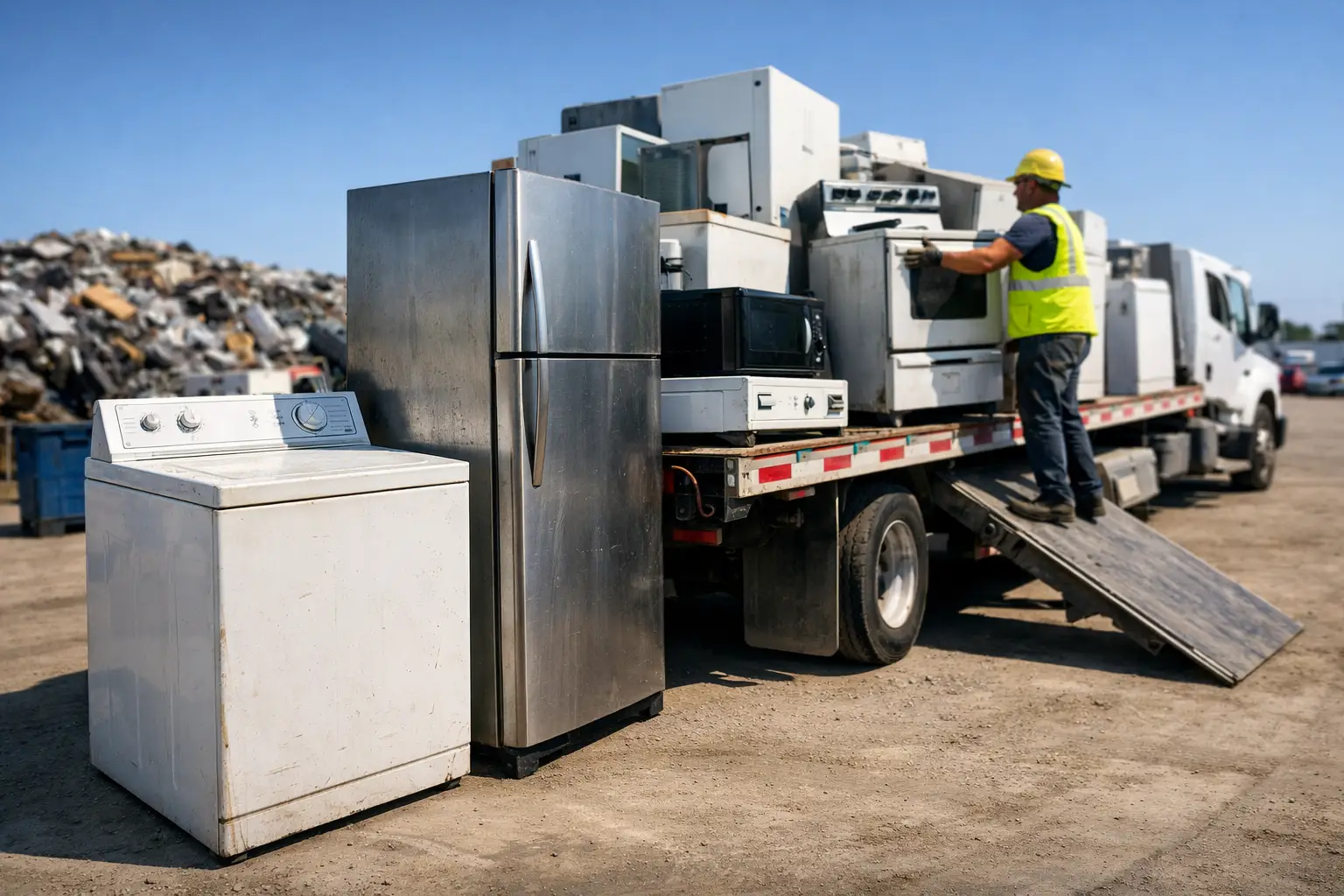
Full-service junk removal is usually the most direct answer when appliances are broken, bulky, upstairs, or part of a larger cleanup. A professional crew handles the lifting, loading, transportation, and responsible disposal process, so you do not need to borrow a truck or figure out where each item belongs.
This is often the best fit for estate cleanouts, evictions, foreclosure cleanups, rental turnovers, garage cleanouts, and remodel projects. Instead of arranging separate trips for an old refrigerator, washer, dryer, stove, mattress, and piles of household clutter, you can clear the space in one appointment.
The cost may be higher than dropping off one appliance yourself, but the value is in the labor and time saved. That matters when the appliance is in a tight laundry room, on a second floor, or buried behind years of stored items. It also reduces the risk of leaving a heavy unit sitting in a driveway while you search for a disposal site.
Rojas Junk Removal provides appliance pickup and broader cleanout support for customers in Bakersfield and nearby communities who need the job handled without the headache. Upfront pricing and a clear scope of work matter, especially when the appliance removal is only one part of the project.
Dump Trailer Rental for DIY Cleanouts
If you are handling a renovation, rental turnover, or major garage cleanup yourself, a dump trailer rental can give you more flexibility than making repeated landfill or recycling trips. You load on your schedule, then the hauling and disposal logistics are handled for you.
This route works best when you have several bulky items and enough people to load safely. It is not the right choice for every appliance. Refrigerators, air conditioners, and other units with refrigerant may need separate handling, so ask about those items before loading the trailer.
Trailer rental can be a cost-effective middle ground for capable DIY customers. Full-service removal is the better call when heavy lifting, stairs, tight access, or a fast deadline are part of the job.
Prepare Appliances Before Removal
A little preparation makes appliance disposal safer and faster. Empty refrigerators and freezers completely, wipe up spills, and remove loose shelves if they could shift during transport. For washers, disconnect water lines and drain remaining water. For dryers, disconnect power and gas connections only if you are qualified to do so. Gas appliances are not a place for guesswork.
Make a clear path from the appliance to the exit. Move rugs, boxes, and anything that could create a trip hazard. If you are scheduling pickup, let the removal team know about stairs, gates, narrow hallways, or appliances located in a backyard or shed. Clear information helps prevent surprises and keeps the job moving.
Do not leave appliances where children could climb inside them, and do not block sidewalks, driveways, or access points while waiting for collection. A quick plan protects your property and gets the space back sooner.
The right disposal option is the one that matches the appliance and your deadline. If the unit still has value, reuse may be worth the effort. If it is broken or hazardous to move, proper recycling or professional pickup is the safer path. Either way, clearing it out is one more step toward a cleaner, more usable property.