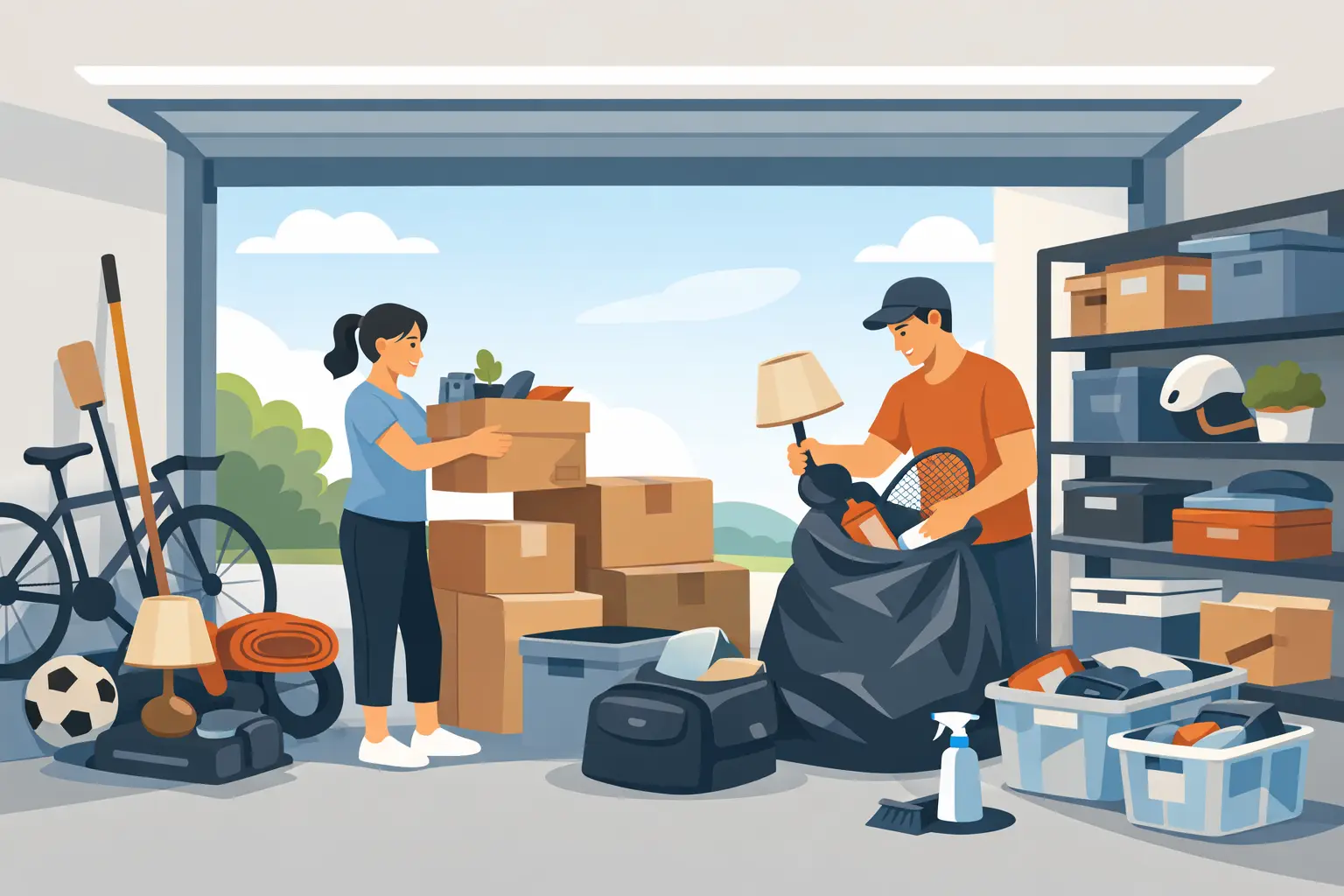
If your garage has turned into the place where everything goes to sit “for now,” you’re not alone. For a lot of homeowners, renters, and landlords, figuring out how to clear out a garage starts with one problem – there’s too much stuff, not enough time, and no easy way to haul the heavy items.
The good news is that a garage cleanout does not have to take over your whole weekend. The fastest approach is to make a plan before you touch anything, stay realistic about what you actually want to keep, and know when it makes more sense to get help with the hauling.
How to Clear Out a Garage the Smart Way
Most garage cleanouts go sideways for the same reason. People start moving random boxes, get stuck opening old bins, and end up making a bigger mess in the driveway than the one they started with.
A better method is to clear in phases. First, decide what the garage needs to do when you are done. Maybe you want room to park again. Maybe you need cleaner storage. Maybe you are dealing with a rental turnover, an estate cleanout, or leftover construction debris after a remodel. The goal matters because it affects what stays and what goes.
Once that is clear, set aside enough time to finish at least one full section. Trying to do the whole garage in rushed 20-minute bursts usually drags the project out for weeks.
Start by Emptying Only What You Can Control
You do not always need to pull every single item onto the driveway. If the garage is packed wall to wall, start with one side, one corner, or one category at a time. That keeps the job from getting out of hand.
As you pull items out, sort them immediately into clear groups: keep, donate, recycle, trash, and heavy haul-out. That last category matters more than people think. Old appliances, broken furniture, mattresses, tires, e-waste, shelving, and piled-up yard debris can slow the whole job down if you treat them like normal trash.
If you already know certain items are going, do not spend extra time rethinking them. A rusty filing cabinet that has been sitting untouched for six years usually does not need another round of debate.
What to Keep and What to Let Go
The hardest part of learning how to clear out a garage is not the lifting. It is deciding what still deserves the space.
A good rule is simple: if the item is useful now, safe to store, and realistically going to be used, keep it. If it is broken, outdated, duplicate, or has been moved from house to house without a purpose, it is probably time to let it go.
Be especially honest with these problem categories:
- half-used paint cans and chemicals
- old electronics and cords
- broken yard tools
- damaged holiday decorations
- mystery boxes from previous moves
- leftover materials from old home projects
Some things do deserve a second look. Power tools, seasonal gear, business inventory, and quality hardware may be worth organizing if you use them. But a garage should not become long-term storage for things you are keeping out of guilt.
Watch for Disposal Problems Early
Not everything can go to the curb. That is where many DIY cleanouts get delayed.
Items like paint, solvents, batteries, propane tanks, e-waste, and certain appliances often need special handling. Construction debris can also be harder to dispose of than people expect, especially if you have concrete, drywall, lumber, tile, or roofing material mixed into the pile.
If your cleanout includes heavy or restricted items, it helps to identify those early so you can avoid creating a sorted pile that then sits for another week because no one can take it.
Set Up the Garage So It Stays Clear
Once the junk is out, resist the urge to shove the remaining items back wherever they fit. That is how the mess comes back fast.
Think in zones. Tools should stay together. Sports equipment should stay together. Holiday storage should stay together. Car supplies, yard gear, and household overflow should each have a defined spot. You do not need a fancy system. You need one that people in the house will actually follow.
Clear bins usually work better than taped cardboard boxes because you can see what is inside. Shelving helps, but only if you avoid stacking random items in front of it. If you want to park in the garage again, measure the space before putting storage back along the walls.
Labeling helps more than most people expect, especially in shared households, rentals, and workspaces. A simple label saves you from tearing through three bins looking for one extension cord.
Leave Room for Real Life
Do not organize the garage so tightly that one busy week ruins the whole setup. Leave open space for normal use. That may mean one shelf for incoming household extras, one bin for donation items, or one section for active project supplies.
If every square foot is packed, clutter comes back quickly because there is no buffer. A functional garage is not one that is stuffed neatly. It is one that still has room to move.
When DIY Makes Sense and When It Doesn’t
Some garage cleanouts are straightforward. If you have a few boxes, some old toys, and light household junk, a do-it-yourself approach can work fine.
But sometimes the smarter move is getting hauling help from the start. That is especially true if you are dealing with bulky furniture, broken appliances, a large amount of debris, an upcoming move, a property turnover, or a garage that has been packed for years.
There is also the issue of time. A landlord between tenants, a contractor finishing a job, or a homeowner trying to reclaim space before a move may not have the luxury of multiple dump runs. When you factor in loading, transportation, disposal fees, and the physical strain, doing it yourself is not always the cheaper option.
A full-service junk removal crew can save hours and handle the heavy lifting. If you still want to do the sorting yourself, a dump trailer rental can be a practical middle ground. You load on your schedule, and the hauling logistics are handled for you.
That flexibility matters when the garage cleanout is part of a bigger project, like a renovation, estate cleanout, foreclosure, or business property cleanup.
A Few Mistakes That Slow the Whole Job Down
The biggest mistake is underestimating volume. What looks like a small garage pile often turns into a full load once it is pulled out and separated.
The second mistake is trying to save too much. Keeping “just in case” items is the fastest way to refill the space with things you do not need.
The third is ignoring safety. Garages often contain sharp tools, unstable stacks, exposed nails, old chemicals, and heavy items stored overhead. Wear gloves, use proper lifting technique, and do not try to muscle out appliances or overloaded shelves by yourself.
One more mistake worth mentioning is waiting for the perfect time. Most garages do not clear themselves because people suddenly get extra free time. They clear out when someone makes a decision and works the plan.
How to Clear Out a Garage Fast Before a Deadline
If you need fast results, cut the project down to what matters most. Focus first on obvious trash, bulky junk, broken items, and anything you already know is leaving. That gives you quick space and momentum.
After that, sort the maybes. Do not start with photo boxes, old paperwork, or sentimental items if time is tight. Those are slow decisions. Handle the easy removals first and come back to the rest once the garage is under control.
For urgent cleanouts, speed usually comes from removing volume fast, not from organizing every screw and storage tote on day one.
If you are in Bakersfield or nearby and the cleanout is bigger than you want to handle alone, Rojas Junk Removal can help take the heavy stuff off your hands so you can focus on getting the space back.
A clean garage does not have to be perfect. It just has to work better than it does right now, and once the extra junk is gone, that part gets a whole lot easier.