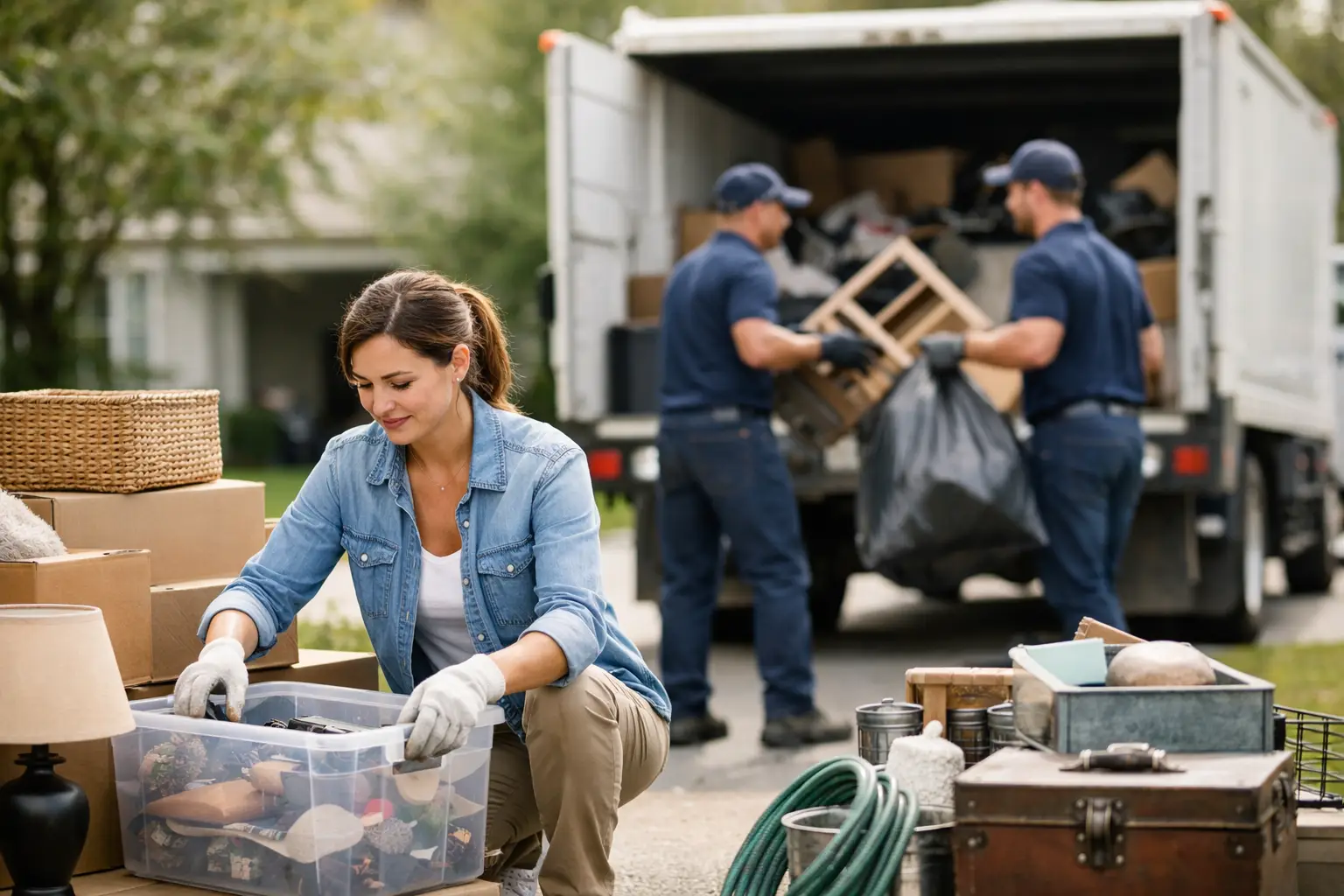
The fastest junk removal jobs usually start before the truck arrives. If you are wondering how to prepare for junk removal, the goal is simple: decide what needs to go, make it safe and reachable, and keep anything you want to save out of the removal area. A little preparation helps your crew work faster, supports accurate pricing, and gets your garage, rental, office, or yard cleared without extra stress.
You do not need to create neat piles or haul heavy items to the curb. Full-service junk removal is meant to handle the lifting. But a few smart decisions before pickup day can prevent delays, protect important belongings, and make sure nothing gets removed by mistake.
Start by Choosing What Stays and What Goes
Walk through the space one area at a time. A garage, spare bedroom, backyard, storage unit, or rental property can feel overwhelming when you look at it all at once. Start at one wall or one room, then make a clear decision on each item: keep it, remove it, donate it yourself, or deal with it separately.
The most important step is separating your keep items from the junk. Move them to another room, place them in a labeled area, or cover them if they must stay in the same space. This matters most during estate cleanouts, move-outs, eviction cleanups, and garage cleanouts, where valuable paperwork, family items, tools, or supplies can be mixed in with unwanted belongings.
If you are unsure about an item, do not leave it in the removal pile. Set it aside until you decide. It is much easier to add an item later than to recover something that was accidentally hauled away.
Make a Clear Removal Area
Your crew does not need every item stacked perfectly, but clear direction saves time. Group smaller loose items where practical, especially boxes, bagged trash, yard waste, and light household clutter. Keep furniture, appliances, mattresses, and bulky items where they are if moving them could cause injury or damage.
For a larger cleanout, use simple labels such as “REMOVE” and “KEEP.” Painter’s tape, sticky notes, or a piece of cardboard works fine. This is especially helpful when a landlord, property manager, family member, or contractor will not be there during the entire job.
Avoid mixing removal items with things that belong to neighbors, tenants, or workers on site. In a shared driveway, apartment complex, or commercial property, a clear boundary prevents confusion and keeps the job moving.
Take a Second Look at Drawers, Cabinets, and Pockets
Before junk removal, check furniture and containers that may hold personal items. Look inside dresser drawers, filing cabinets, desk compartments, nightstands, coat pockets, toolboxes, storage totes, and old purses. People often find keys, cash, paperwork, photos, jewelry, medications, and sentimental items after they thought a space was empty.
This is also the right time to remove private documents. Shred documents with account numbers, medical details, tax information, or personal identification if you no longer need them. If you are cleaning out a business, gather customer records, employee files, and sensitive paperwork before the crew arrives.
Know Which Items Need Special Handling
Most everyday junk can be removed without a problem, including old furniture, appliances, electronics, cardboard, yard debris, renovation debris, and general household clutter. Some materials, however, have disposal rules or safety concerns. Mention these items when requesting a quote so there are no surprises on pickup day.
Common items that may need special handling include:
- Paint, chemicals, fuels, solvents, pesticides, and other hazardous materials
- Propane tanks, fire extinguishers, and pressurized containers
- Batteries, including vehicle, lithium-ion, and large rechargeable batteries
- Medical waste, sharps, and certain contaminated materials
- Items containing refrigerant, such as refrigerators, freezers, and air conditioners
Do not try to hide hazardous materials inside bags, boxes, or furniture. Proper disposal protects the crew, your property, and the community. If you are not sure whether something can be hauled, ask before your appointment. A quick conversation is better than having to stop a job because an item cannot be loaded.
Prepare Access for the Junk Removal Crew
A clear path is one of the best ways to prepare for junk removal. Move cars from the driveway if the crew needs access to a garage, backyard gate, or side yard. Unlock gates, remove padlocks, and make sure pets are safely secured indoors or in an enclosed area.
Inside the property, clear narrow walkways where you can. Pick up loose cords, rugs that slide easily, children’s toys, and breakable decorations. You do not need to rearrange your whole home, but the crew needs a safe route for carrying large or heavy items.
For apartments, offices, and commercial buildings, plan ahead for parking, elevators, loading docks, gate codes, and building access rules. Some properties require a certificate of insurance, reserved loading access, or advance notice to management. Those details can determine whether a job takes one hour or most of the day.
If the pickup is at a rental property or vacant home, make sure the person meeting the crew can access every area that needs to be cleared. A locked shed, closed storage room, or inaccessible backyard may require a return visit.
Get Ready for an Accurate Quote
Junk removal pricing typically depends on how much space the items take up in the truck, along with labor, weight, access, and disposal requirements. A few photos can help provide a more realistic estimate before arrival. Take wide shots of the full pile and closer photos of large items, such as couches, appliances, construction materials, or oversized debris.
Be upfront about difficult access. Stairs, long carry distances, steep yards, heavy materials, and large quantities of debris may affect the work involved. That does not mean the job cannot be done. It simply helps the crew bring the right equipment, schedule enough time, and give you clear expectations.
If you plan to add more items after receiving a quote, mention that before loading begins. Upfront communication protects you from price surprises and helps the removal team work efficiently. Rojas Junk Removal is built around straightforward quotes and practical service, so a clear picture of the job helps everyone start on the same page.
Do Not Do the Heavy Lifting Yourself
Many customers try to save time by dragging a sofa outside, carrying an old refrigerator down steps, or loading broken concrete into piles. Sometimes that helps, but it is not always worth the risk. Heavy furniture, appliances, construction debris, and wet yard waste can cause back injuries, damaged walls, broken gates, or driveway damage.
Leave difficult items where they are and point them out to the crew. If you do move smaller items, use sturdy boxes or contractor bags and do not overfill them. A bag that is too heavy to lift safely is harder to remove, not easier.
The same applies to construction and landscaping debris. Keep nails, sharp metal, broken glass, and loose blades contained when possible. Place sharp materials in a rigid container or clearly mark them. Never leave them hidden in a loose trash bag where someone could get hurt.
Plan for Children, Pets, and the Final Walkthrough
Removal day involves lifting, dollies, truck traffic, and frequent trips in and out of the property. Keep children and pets away from the active work area. Let the crew know if there are animals on the property, low branches, soft ground, uneven steps, or other conditions that may affect safe access.
Before the crew leaves, take a final walkthrough. Check closets, sheds, corners of the garage, and behind doors. Confirm that every item marked for removal is gone and that anything you intended to keep is still in place. This is the best time to ask questions or point out an item that was missed.
A cleanout does not have to become a weekend-long hauling project. Make your decisions, clear the access, communicate the details, and let the professionals handle the heavy work. Once the unwanted items are gone, you can get back to using the space the way you need it.